Penetration depth穿透深度
+30.7mm
conventional: 20–26 mm傳統:20–26 mm
Reaches deeper targets such as the medial prefrontal region without raising the surface field to compensate. 能觸及內側前額葉等較深靶區,而不需要靠加大表層電場來硬補深度。
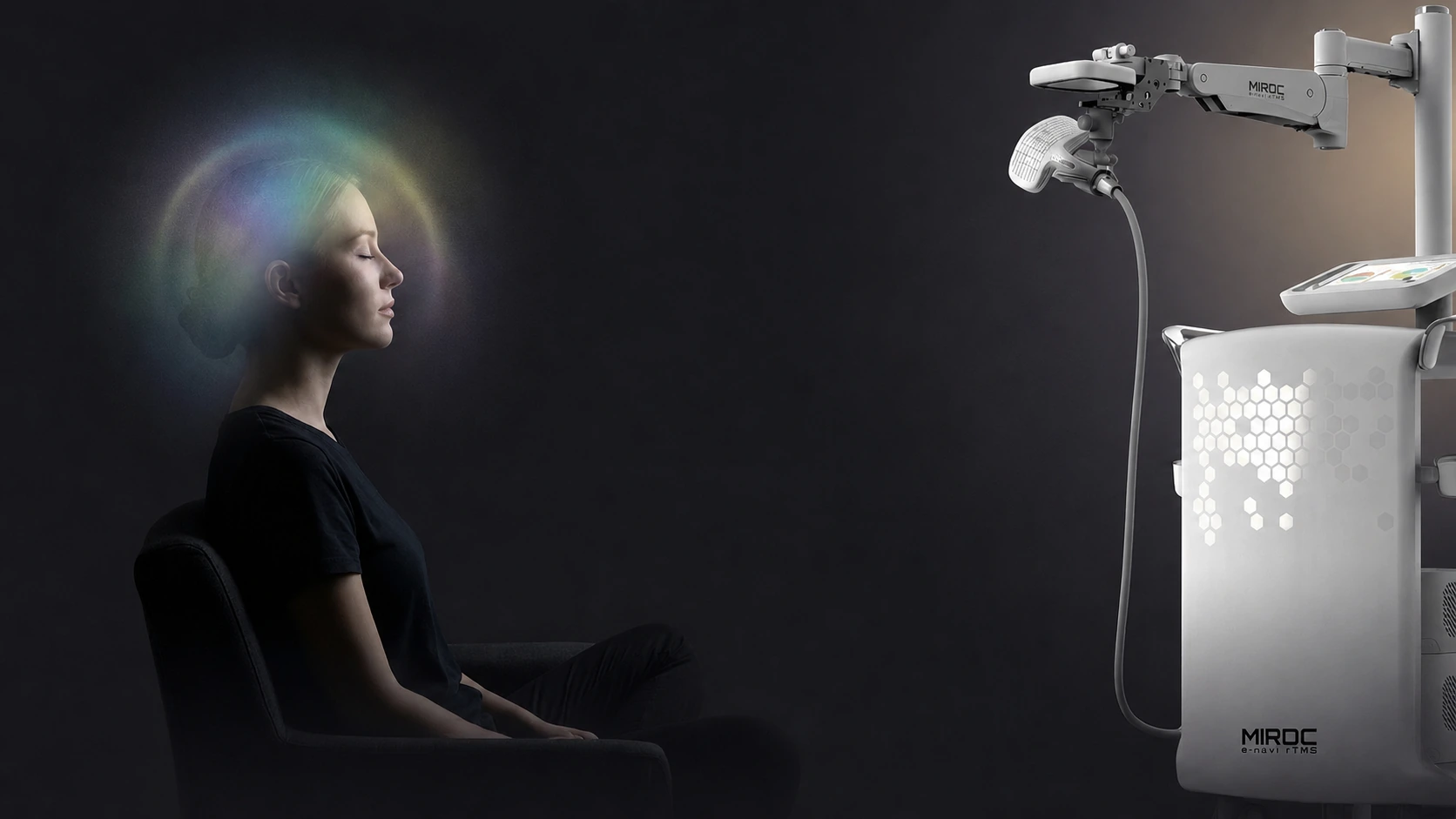
MIRDC · e-navi rTMS
A next-generation rTMS research platform that brings multi-channel stimulation, field simulation and positioning feedback into one coherent clinical workflow.
次世代 rTMS 研發平台,將多通道刺激、
Research & development showcase研究開發成果展示
Technology核心技術
A conventional figure-of-eight coil produces a 30 mm radius field at 7–30 mm depth, and has to trade stimulation area against focality. Widening one narrows the other. e-navi rTMS resolves that trade with a coil array rather than a single winding. 傳統 8 字型線圈產生半徑 30 mm、深度 7–30 mm 的電場,刺激範圍與聚焦性必須互相取捨——放寬一邊就犧牲另一邊。e-navi rTMS 用線圈陣列取代單一繞組,直接解開這個取捨。
A 50 mm multi-channel array replaces the single figure-of-eight winding. It widens the effective stimulation area and deepens reach at the same time, and it covers multiple indications without swapping the coil between protocols. 以 50 mm 小尺徑多通道陣列取代單一 8 字型繞組,同時擴大有效刺激範圍與加深穿透,並且支援多種適應症而不需要在協議之間更換線圈。
Patented · MIRDC自有專利 · 金屬中心
Induced fields only activate neurons aligned with them, so a fixed field is hostage to the direction of the gyrus underneath it. Electronically rotating the field through a full circle recruits far more neurons and cuts the variation between one patient and the next. 感應電場只會活化與其方向平行的神經元,固定方向的電場因此受制於下方腦迴的走向。以電子方式讓電場全周旋轉,能徵召更多神經元,並降低病人之間的治療差異。
Patented · multi-axis protocol自有專利 · 多軸向刺激協議
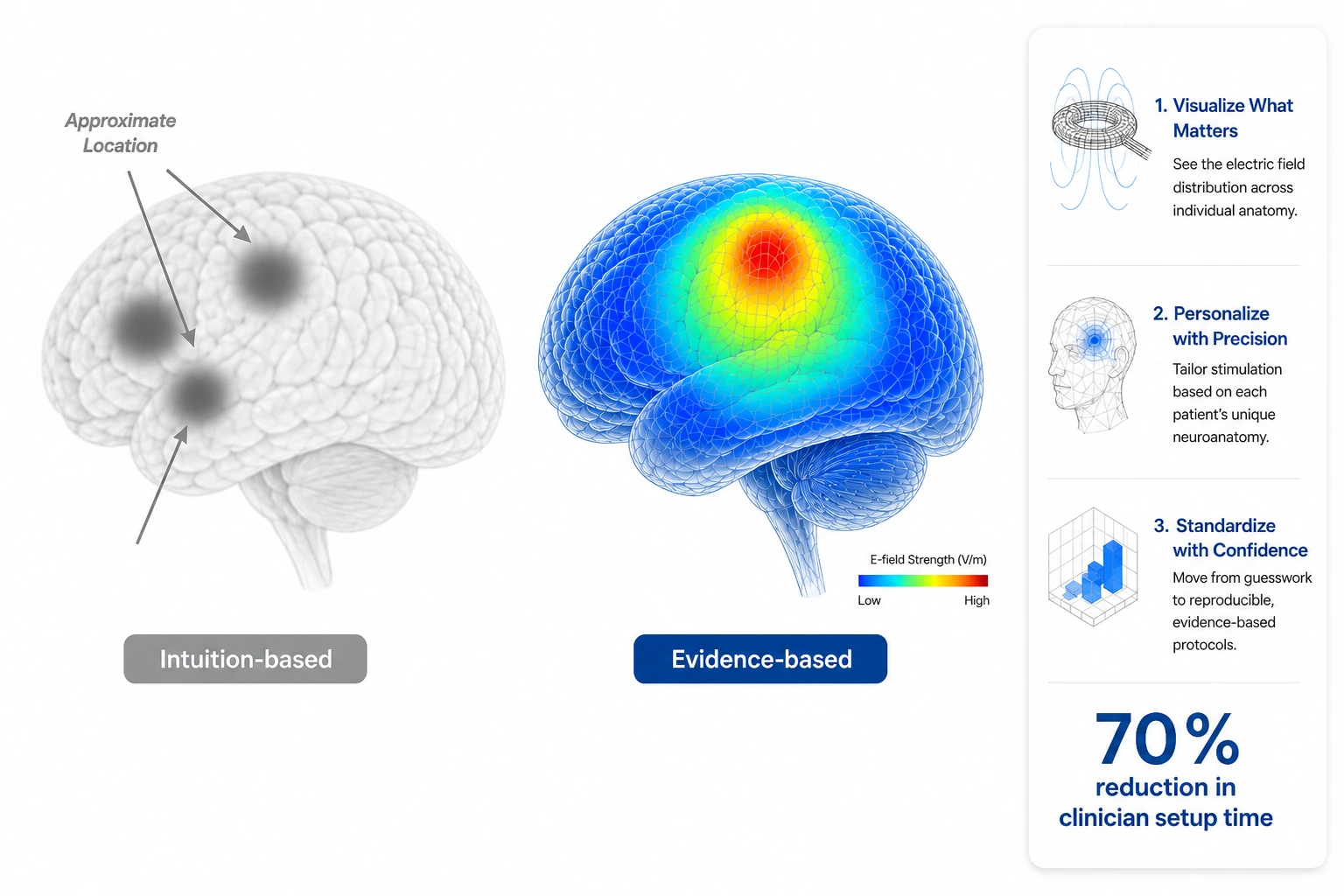
Finite-element modelling renders the induced field on the patient's own anatomy during the session, with optical marker tracking for position feedback. The clinician reads a picture of the delivered dose instead of a number on a dial. 以有限元素法在療程中把感應電場算繪在病人自己的解剖影像上,並以光學標記追蹤提供定位回饋。醫師看到的是實際劑量的圖像,而不是儀表上的一個數字。
FEM · validated against ANSYS & SimNIBSFEM · 以 ANSYS 與 SimNIBS 交叉驗證
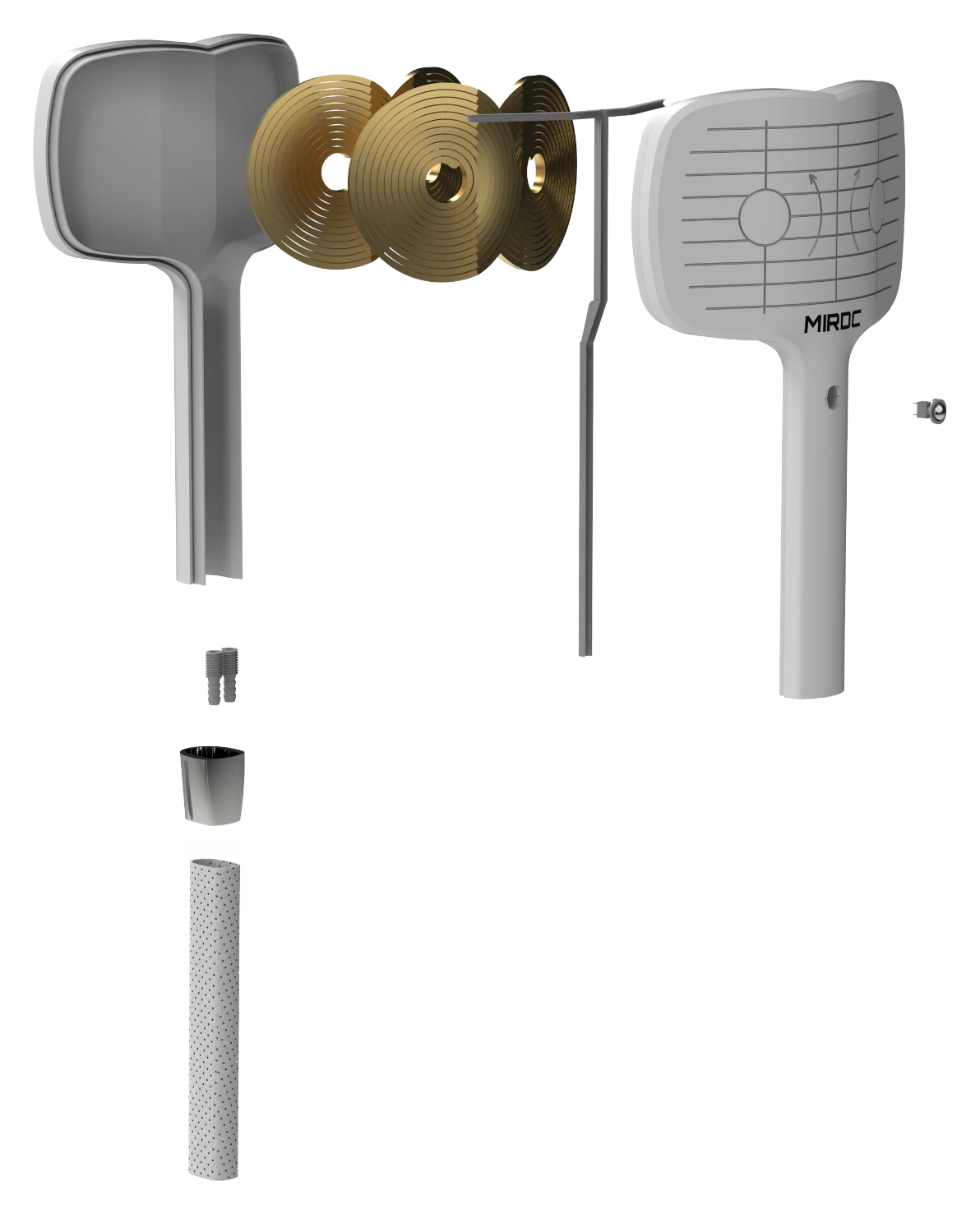
A conventional coil is a single figure-of-eight winding, so its field direction is fixed by geometry. Stacking multiple windings in one head lets the drive electronics steer the field between them — which is what makes the rotating protocol and the wider coverage possible in the first place. 傳統線圈是單一 8 字型繞組,電場方向被幾何形狀鎖死。在同一顆頭裡疊上多組繞組,驅動電路才能在它們之間操控電場方向——旋轉協議與更廣的覆蓋範圍,都是從這裡來的。
Coil head replaced independently · no full-system swap線圈頭可獨立更換 · 不需汰換整套系統
Performance效能
Each figure is stated against the conventional figure-of-eight coil it replaces, so the comparison stays legible rather than flattering. 每個數字都直接對照它所取代的傳統 8 字型線圈,讓比較是可讀的,而不是好看的。
Penetration depth穿透深度
+30.7mm
conventional: 20–26 mm傳統:20–26 mm
Reaches deeper targets such as the medial prefrontal region without raising the surface field to compensate. 能觸及內側前額葉等較深靶區,而不需要靠加大表層電場來硬補深度。
Cortical coverage皮質覆蓋
2.74×
conventional: standard field傳統:標準場域
Covers the whole DLPFC region in one placement, which is what mood regulation protocols actually target. 一次定位就涵蓋整個 DLPFC 區域,而情緒調節協議要打的正是這個範圍。
Session time單次治療時間
~3min
conventional: ~30 min傳統:約 30 分鐘
Theta-burst protocols compress the session, so one machine serves a full day list instead of a handful of patients. Theta burst 協議壓縮了療程長度,同一台機器能排滿一整天,而不是只服務少數幾位病人。
Positioning tolerance定位容許誤差
±12mm
conventional: ±30 mm傳統:±30 mm
The wider field tolerates placement error, so the planned dose is the delivered dose without a navigation rig. 較廣的電場容許定位誤差,因此不靠導航設備,計畫劑量就是實際送達的劑量。
The machine機器本身
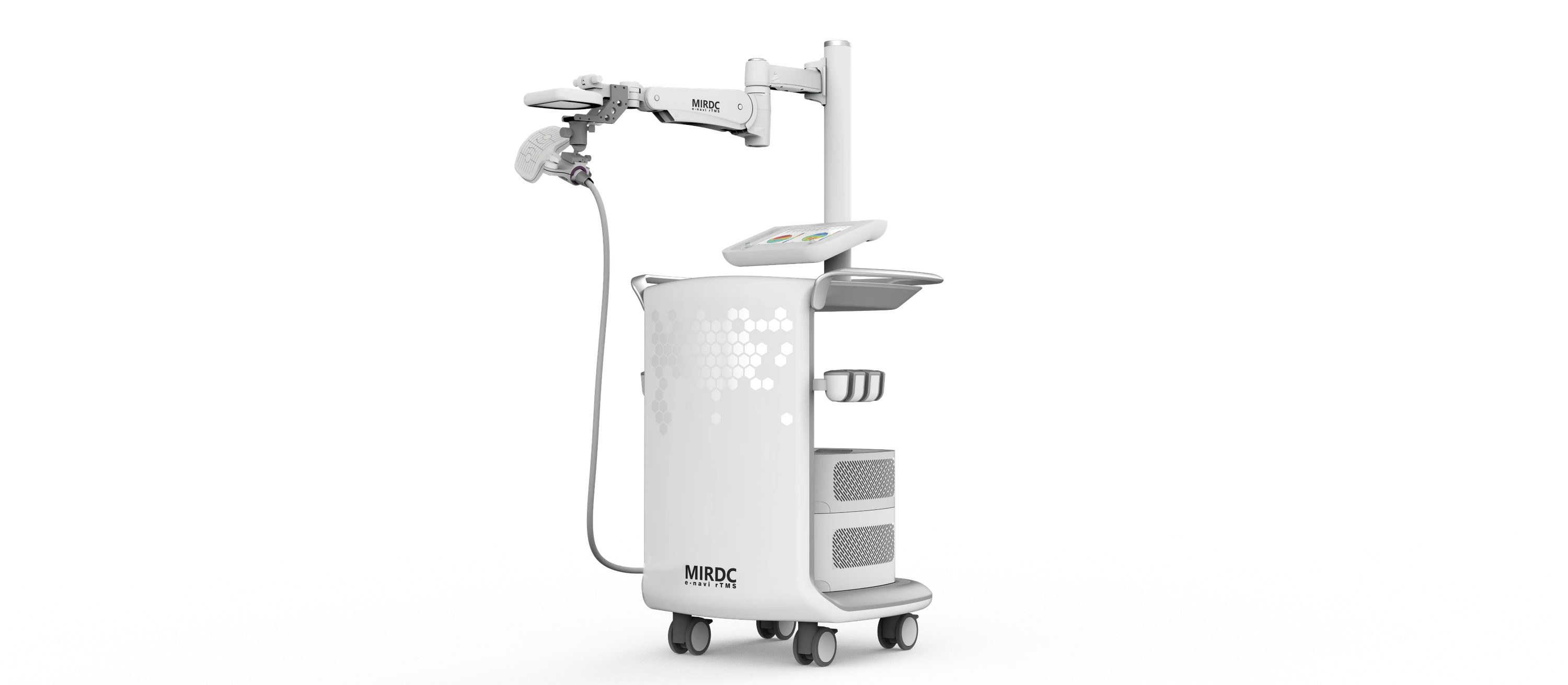
Power stage, control host and cabling all sit inside the column — nothing bolted on the outside, no second chassis to roll alongside. It wipes down in one pass, it fits a standard consulting room, and it runs off a single wall socket. 功率級、控制主機與線材全部收在柱體內部——外面沒有外掛件,也不必再推第二台機箱。一次就能擦拭完成消毒、放得進標準診間、單一牆上插座就能運作。
Design設計
Form decisions here were made against research in colour psychology, neurological perception and cognitive ergonomics — then checked against manufacturability. Each one below is either lowering a patient's arousal or lowering the chance of an operator error. 這裡的造型決策都對照了色彩心理學、神經知覺與認知人因的研究,再回頭檢驗可製造性。以下每一項,不是在降低病人的緊張程度,就是在降低操作失誤的機率。
The display carries the field, the target and the dose. Every other function sits one level down, so the hierarchy itself tells the clinician where to look. 畫面上只有電場、靶點、劑量三件事,其餘功能都降一層。層級本身就在告訴醫師該看哪裡。
Norman, The Design of Everyday Things, 2013Saturated colour measurably raises arousal in clinical settings. Holding the whole system at low chroma keeps the room reading as a room. 高彩度在臨床環境中會實際提高喚起水準。整套系統維持低彩度,讓診間讀起來仍然像一個房間。
Küller et al., Ergonomics, 2009A honeycomb graphic is screen-printed onto the column. Broken surface reads as lighter mass, so the pattern takes visual weight and bulk off a large volume — and it carries the technology cue without adding a part. 柱體上的蜂巢圖樣以網版印刷完成。被打散的表面會被感知為較輕的量體,因此圖樣削掉了大體積的視覺重量與厚重感——而且不增加任何零件就傳達了技術感。
Karjalainen, Design Studies, 2014Angular contours draw a stronger amygdala response than curved ones. Every visible edge carries a radius, including the ones that would have been cheaper left sharp. 銳角輪廓引發的杏仁核反應強於曲線輪廓。每一條看得見的邊都有導角,包括那些留成銳邊會比較便宜的地方。
Nasr & Tootell, 2018Cables route to the side and rear. The face a patient looks at carries a coil arm, a display and nothing else. 線材全部走側面與背面。病人正對著的那一面,只有線圈臂與螢幕。
Design decision設計決定The arm counterbalances the coil head so it holds position without being clamped. One hand places it, and it stays where it was put. 懸臂為線圈頭配重,不需夾緊就能定位。單手擺放,放到哪就停在哪。
Ergonomic grip · transmitter bracket人因握把 · 發射器支架
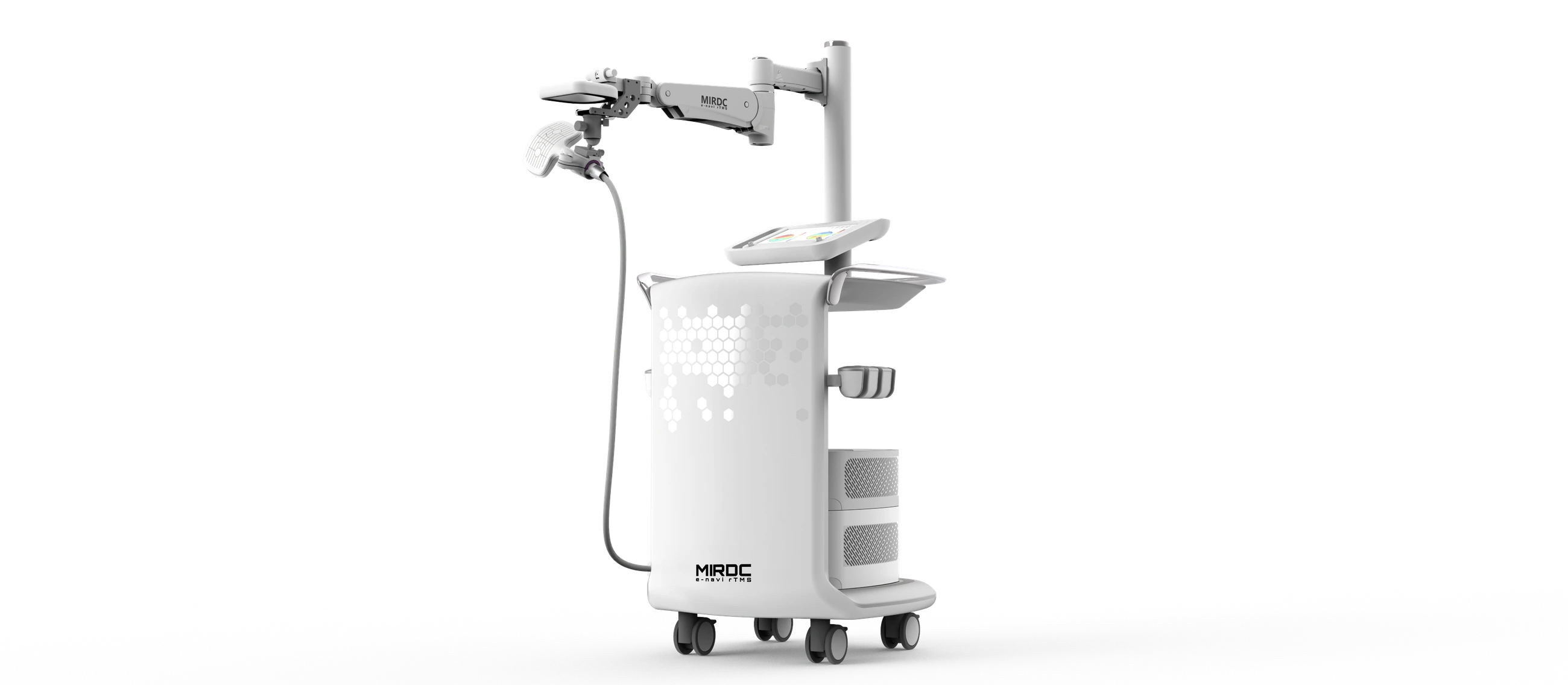

Invisible energy, softly delivered無形的能量,溫柔送達
Enabling people to see the colours of life again. 讓人重新看見生活的顏色。
In the room在診間裡
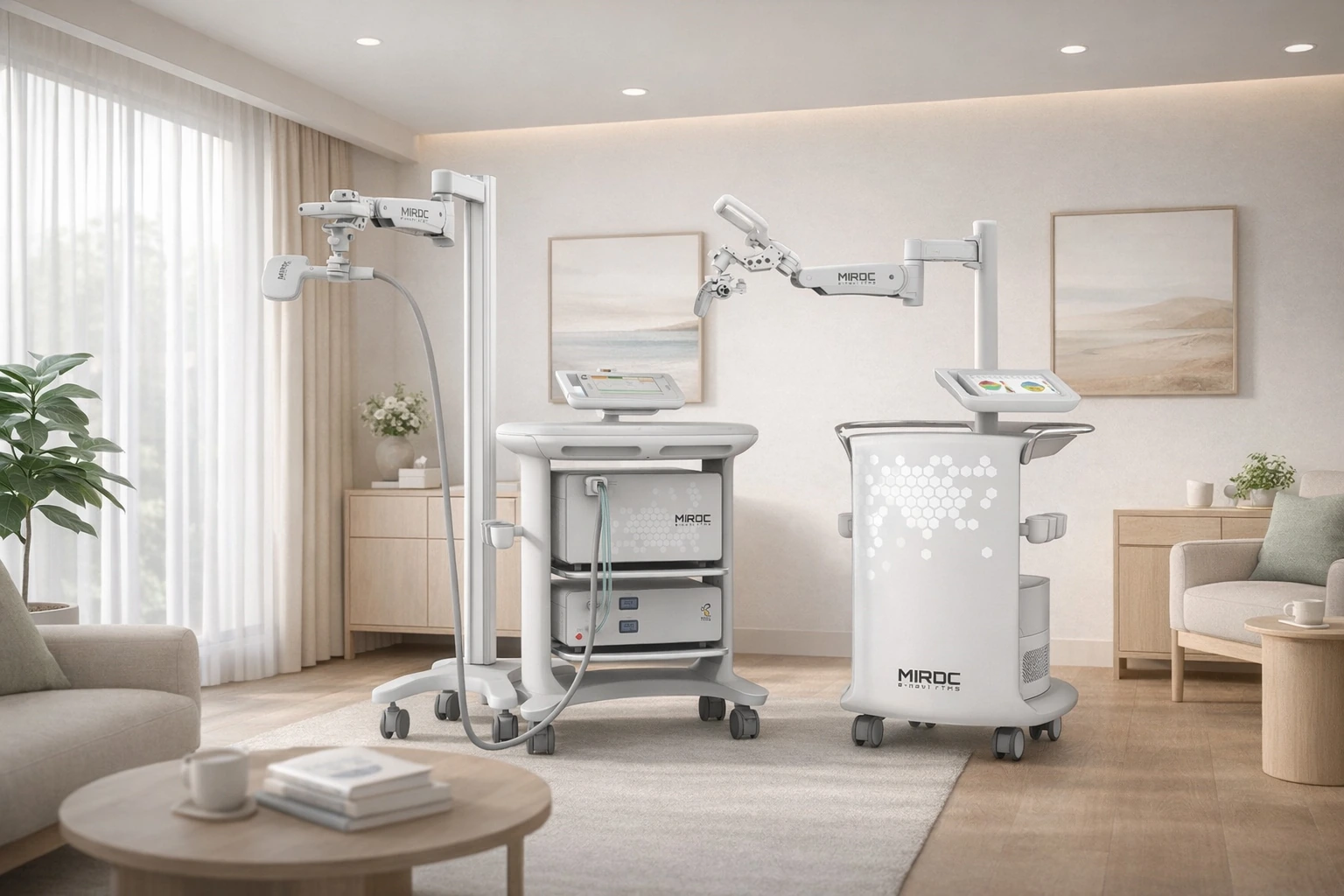
A mobile, integrated form brings the control interface, coil support and core system into one clinical footprint. Deployment requirements are confirmed case by case. 可移動的一體式量體,將控制介面、線圈支撐與核心系統整合在同一診間尺度中;實際建置條件依場域確認。
01
Plan — review anatomy, protocol and the intended target.規劃——確認解剖影像、刺激協議與預定靶區。
02
Position — use optical feedback to support repeatable setup.定位——以光學回饋支援可重現的操作設定。
03
Record — retain position, posture and operating parameters.記錄——保存位置、姿態與操作參數供後續檢視。
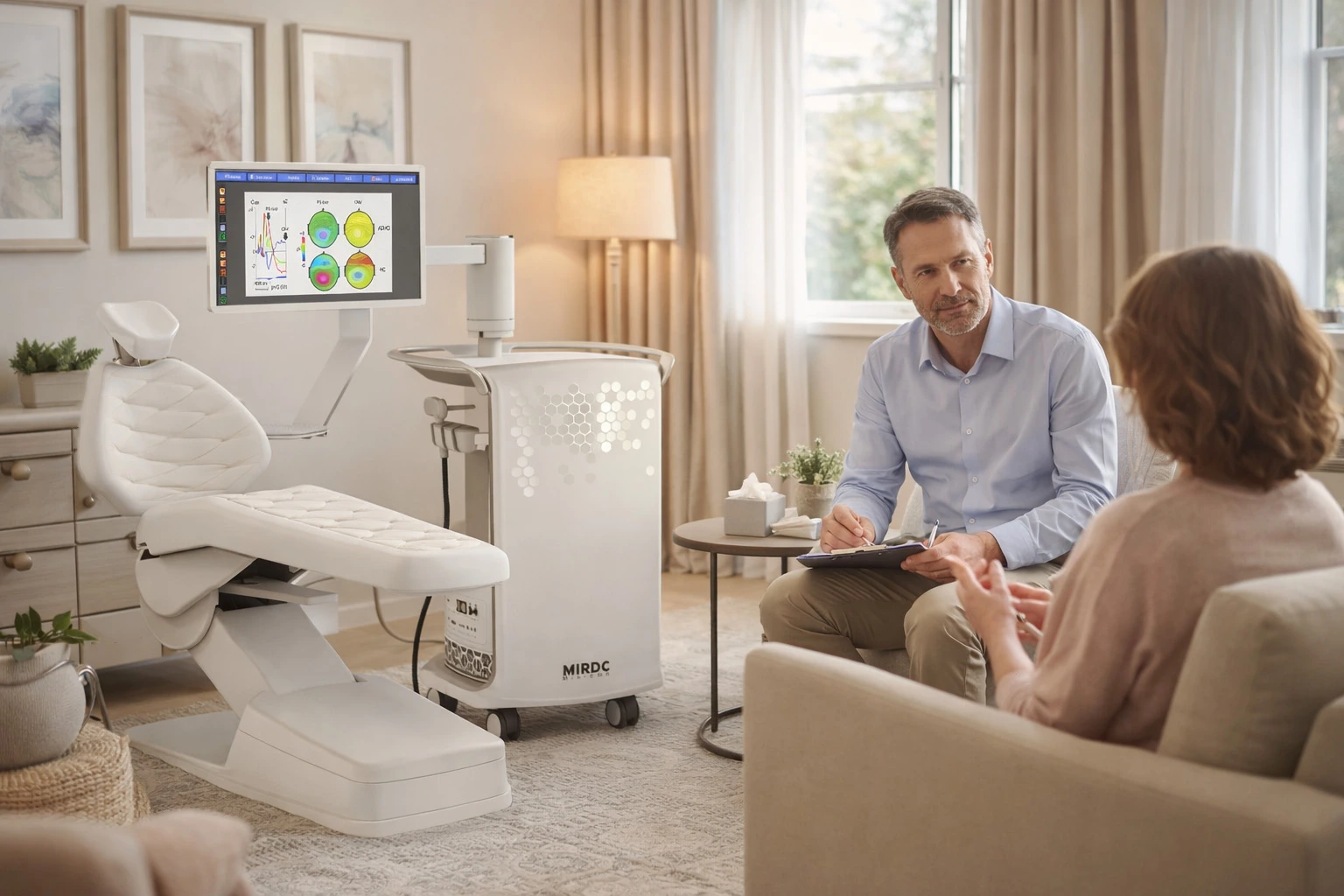
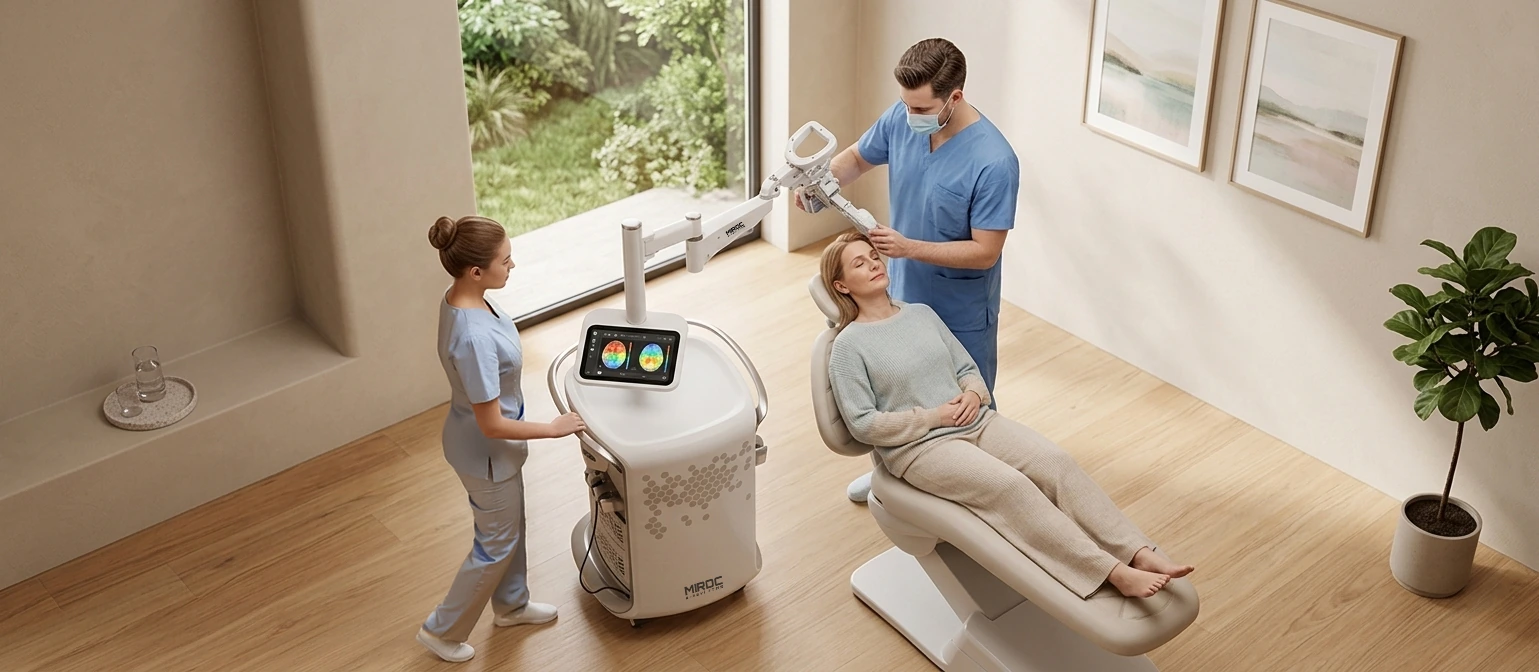
Make the invisible field understandable — for the operator, the researcher and the person in the chair.讓看不見的電場變得可理解——給操作者、研究者,也給坐在治療椅上的人。
e-navi rTMS design principlee-navi rTMS 設計原則
Specifications規格
Stimulation protocols刺激協議
Pulse parameters脈衝參數
Repetition rate重複率
1–250pps
Number of trains脈衝串數
1–500
Inter-train interval串間間隔
1–120s
Pulse width脈衝寬度
≥70μs
Field & positioning電場與定位
Coil線圈
50mm
Twinverse D multi-channel arrayTwinverse D 多通道陣列
Positioning tolerance定位容許誤差
±12mm
Optical marker tracking · no neuronavigation system光學標記追蹤 · 不需神經導航系統
Field feedback電場回饋
FEM
Rendered on patient anatomy in real time即時算繪,疊合病人解剖影像
Standards considered & serviceability開發參考標準與維護
Conventional figure-of-eight coils reach 7–30 mm at a 30 mm field radius, and depend on a separate neuronavigation system for targeting. 傳統 8 字型線圈的電場半徑 30 mm、深度 7–30 mm,且靶區定位仰賴另一套神經導航系統。
Serviceable by design可維修的設計
The coil head takes an independent upgrade with zero full-system replacement. The screen arm evolves through software. When the compute generation turns over, the chassis, the arm and the castors stay in the room. 線圈頭可獨立升級,不需更換整套系統;螢幕臂透過軟體持續演進。當運算世代翻新,機殼、支臂與腳輪都留在診間裡。
01
Independent modules support targeted maintenance and future upgrades.模組可獨立維護,並為後續升級保留彈性。
02
A longer useful life is considered from enclosure to electronics.從機構外殼到電子系統,皆以延長有效使用週期為設計考量。
UN Sustainable Development Goals addressed對應的聯合國永續發展目標




Deployment佈署
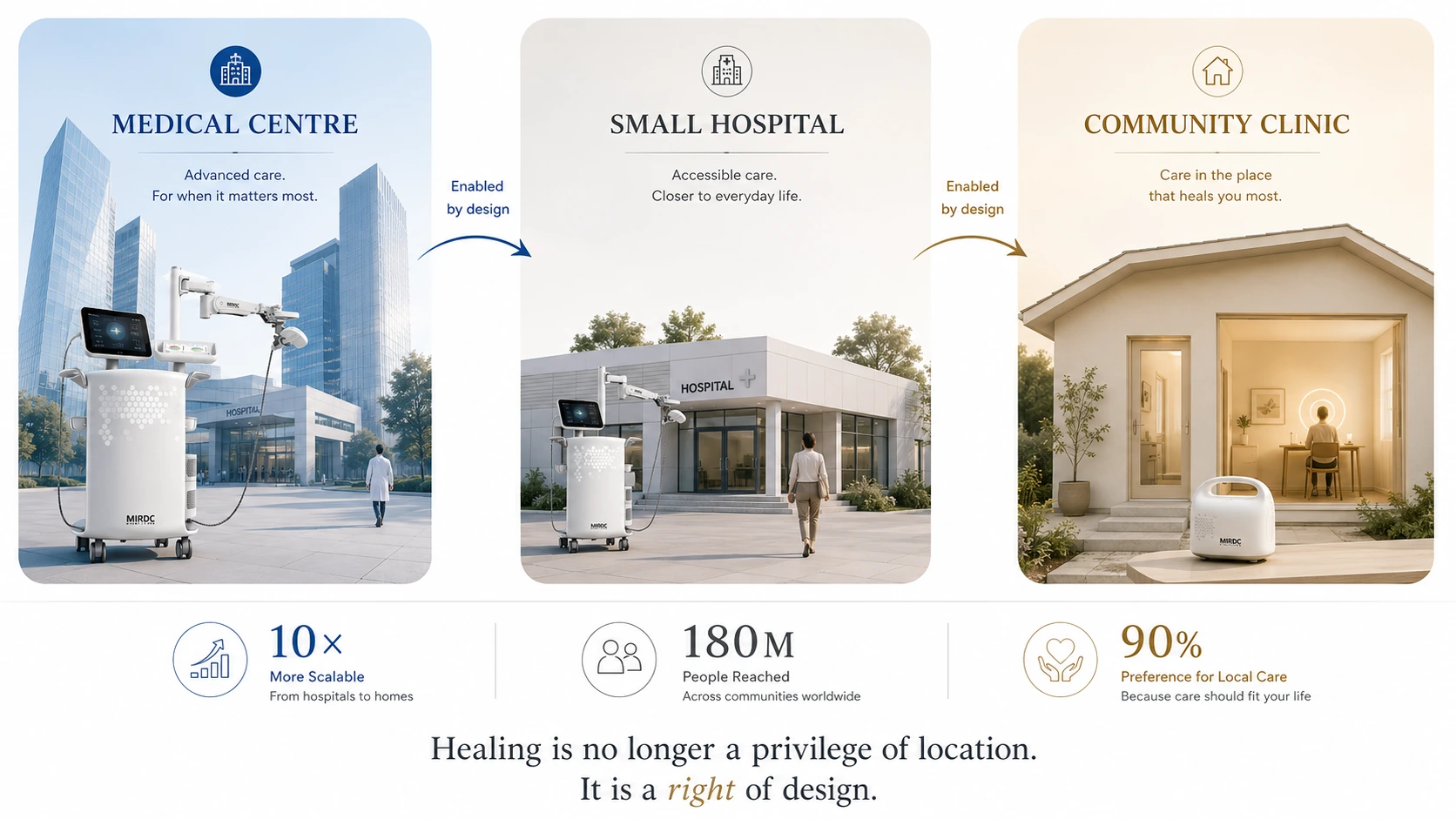
The integrated product concept is designed for evaluation across medical centres, regional hospitals and community clinics. Site fit, training and regulatory requirements remain subject to local review. 一體式產品概念以醫學中心、地區醫院與社區診所等場域為評估方向;實際空間、訓練及法規需求仍須依所在地確認。

Developed at MIRDC through a programme spanning clinical research, regulatory planning and industrial engineering — from IGBT drive and high-grade cabling to coils, software and full-system integration. 由金屬工業研究發展中心推動研發,涵蓋臨床研究、法規規劃與產業工程——從 IGBT 驅動、高階電纜、線圈、軟體到整機整合。
Clinical臨床
Clinical research臨床研究
Research研究
Preclinical studies臨床前研究
Regulatory法規
Regulatory planning法規規劃
System assembly整機組裝
System engineering整機工程
IGBT driveIGBT 驅動
Drive & power modules驅動與電源模組
Developed by開發單位
MIRDCMetal Industries Research & Development Centre金屬工業研究發展中心
Designed in Taiwan. Developed for the next clinical conversation. 設計於台灣,為下一場臨床對話持續研發。
Contact聯絡
Metal Industries Research & Development Centre — an applied research institute in Kaohsiung, Taiwan, working on medical devices, smart manufacturing and materials. 財團法人金屬工業研究發展中心——位於高雄的應用研究機構,長期投入醫療器材、智慧製造與材料技術。